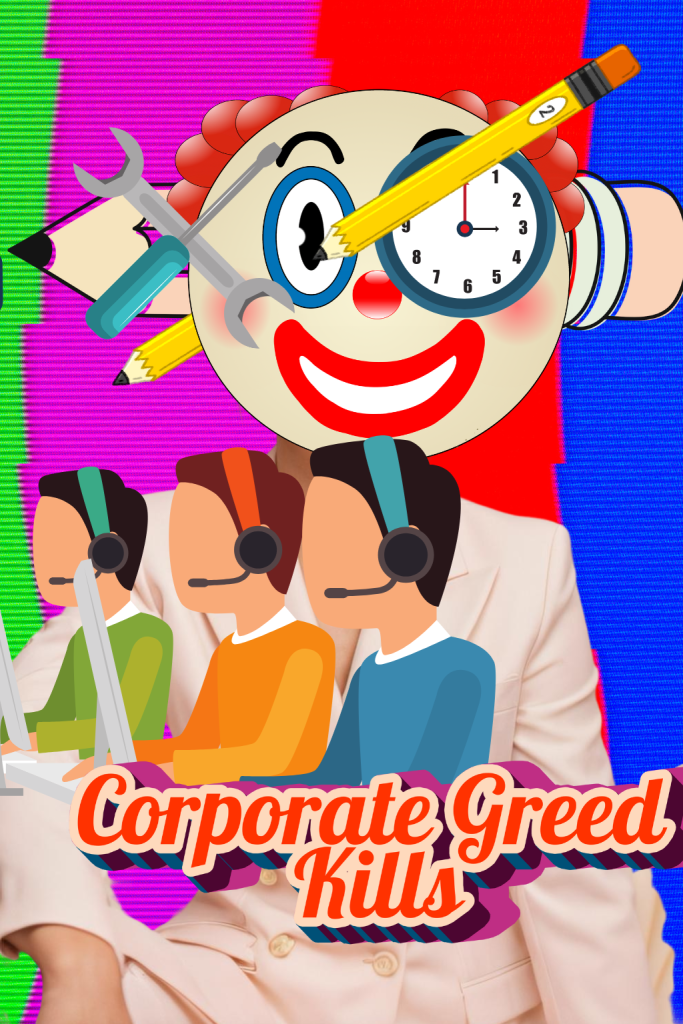
What if every single person in corporate America making less than 100k all walked out at the same time? Think about it. But that’s not what this is about.,.
I’ve worked in education, in nonprofit leadership, in media, and in corporate America for over 25 years. I’ve trained people, built programs, solved problems before leadership knew they existed. I taught in classrooms where the expectation was to give everything and apologize for needing a paycheck.
I’ve shown up in every space. In every sector. And yet, somehow, I’m still just a number 2 pencil. You know the kind. The standard-issue pencil handed out before the big bubble test. Reliable. Ubiquitous. Expected to perform until it can’t anymore. Once it’s been over-sharpened, stripped down, splintered, bitten, and erased bald, then it gets tossed. Not because it didn’t work. But because it worked too long.
That’s what it feels like to be someone like me in the system. A woman post-menopause, post-hustle, post-illusion. No matter what I’ve offered, no matter the degrees, the deliverables, the decades, I’m expected to keep my head down and grind. To train the newcomers brought in at higher ranks. Often with less experience, less context, and sometimes less clarity. But they’ve leaned into the song and circle-back dance.
There’s an unspoken rule in corporate culture, one I’ve encountered in nearly every industry, that rewards a particular kind of humility. But it’s not the kind rooted in character. It’s the kind rooted in compliance. The kind that keeps systems comfortable and hierarchies intact.
I’m told to defer to those above me on the org chart, even when they have less education, less breadth, less time in. I’ve been advised, in subtle ways and not-so-subtle ones, to lower my voice; couch my insights as questions; preface knowledge with an apology, because anything else is too aggressive.
The truth is, I used to be humble in that way. I played nice. I didn’t challenge the nonsense. I didn’t name the contradictions. I believed that if I kept delivering, the work would speak for itself.
I’ve stopped pretending.
The difference between a mechanical pencil and a number 2 isn’t just about engineering. It’s about preservation. Mechanical pencils are built to last: refillable, replaceable, protected. A broken part gets swapped out. The tool remains.
A number 2, though? It’s made to be consumed. That’s the design. Use until useless.
A lot of people my age, especially those of us who’ve spent decades inside systems built on decorum, compliance, and quietly bearing the weight, know what it is to be useful past the point of use. We’ve watched others, often newer, often less burdened by credentials or history, ascend into roles we once imagined for ourselves. Eventually, you stop reaching for the rungs on a ladder that is too rotten to hold your weight. And there’s a strange freedom in that; a release from the illusion that playing by the rules was ever going to be enough.
If you’ve lived as a number two pencil, then you understand something more intimate than ambition. You know what it is to be whittled down. To be over-sharpened, splintered, gnawed on. To be held anyway. Used anyway. And in the end, what’s left isn’t neat or pretty. Try to erase, and you’ll tear straight through the paper. Try to write, and you might leave a jagged scratch. A smudge. A scar. But it’s still a mark. And maybe that’s the point. Not to keep the page clean.
What if every single person in corporate America making less than 100k all walked out at the same time? It would collapse, of course. Because what this is really about is the pencil. Worn down, overused, and still expected to deliver. Here’s the truth, though. Many of us have nothing to prove. No points left to make. No fucks to give, as they say. Just the mark we choose to leave, and the certainty that it’s ours.
Discover more from Mocktail Hour with Amy Abeln
Subscribe to get the latest posts sent to your email.
