So many of us humans battle an ongoing desire to drink, use, fall in love, or consume food, culture, material wealth, and goods. It’s a real problem in our Western society. But it does not make us broken. Instead, it reveals how alive we still are.
Every craving begins in the same ancient brain circuitry: the seeking system. Buried in the midbrain and fueled by dopamine, it generates the pulse of anticipation: the bright, forward-leaning feeling of wanting. Once the goal is reached, dopamine recedes, and the high dissolves. What we chase isn’t pleasure, but the anticipation of it.
That design once kept humans alive. It urged our ancestors toward food, warmth, and each other. Today, that same circuitry loops without rest. Around and around we chase stimulation instead of nourishment, and transaction instead of connection. Craving is not a disease; it’s a signal. It’s our body insisting that something vital still wants to live. Yet in a culture that confuses satisfaction with consumption, we no longer know where to take that wanting.
Capitalism learned to harvest the yearning. Every advertisement and algorithm is built to trigger that quick spark of anticipation; the instant before the click, the purchase, the sip. The market doesn’t pretend to sell fulfillment. We are sold on the possibility of it. It thrives on keeping us slightly unsatisfied, tuned to longing but deprived of landing. The human nervous system becomes an engine of profit, our desire endlessly lit but rarely soothed. Desire becomes a form of labor, leaving us exhausted.
The same circuitry that makes us chase can make us create. The energy that drives addiction is the same current that drives curiosity and love. Chemistry itself is neutral. Dopamine, oxytocin, and serotonin aren’t good or bad, virtuous or shameful. The brain releases dopamine when a parent soothes a baby and when someone wins a bet or takes a drug. The molecules don’t distinguish between love and obsession or generosity and greed. They only mark intensity. They yell, Hey! Pay attention! Something matters here!
What gives that chemistry meaning is where we aim it. Direction turns raw impulse into choice. Dopamine can drive us toward connection or toward consumption, toward art or addiction, toward a playlist that unites a park or a purchase that isolates us in a glow of blue light. The moral weight isn’t in the neurochemistry; it’s in the pattern we build around it, whether it loops back into life or drains it.
I think of it this way: the seeking system is like a river. Its current is constant and ancient. It irrigates everything around it when channeled through attention, creation, or love. When it’s dammed inside consumption or control, it floods and erodes. The water never changes, but the banks of the river change shape.
That’s the revelation: the body’s impulses aren’t shameful or dangerous. They’re neutral forces that patriarchy and capitalism learned to weaponize, and reclaiming direction by deciding where your energy flows is the act of autonomy itself.
The loop restarts when we aim our energetic current at objects that vanish once touched. When our current meets something living, like a person, a purpose, or a shared rhythm, the circuit completes and our fulfillment arrives.
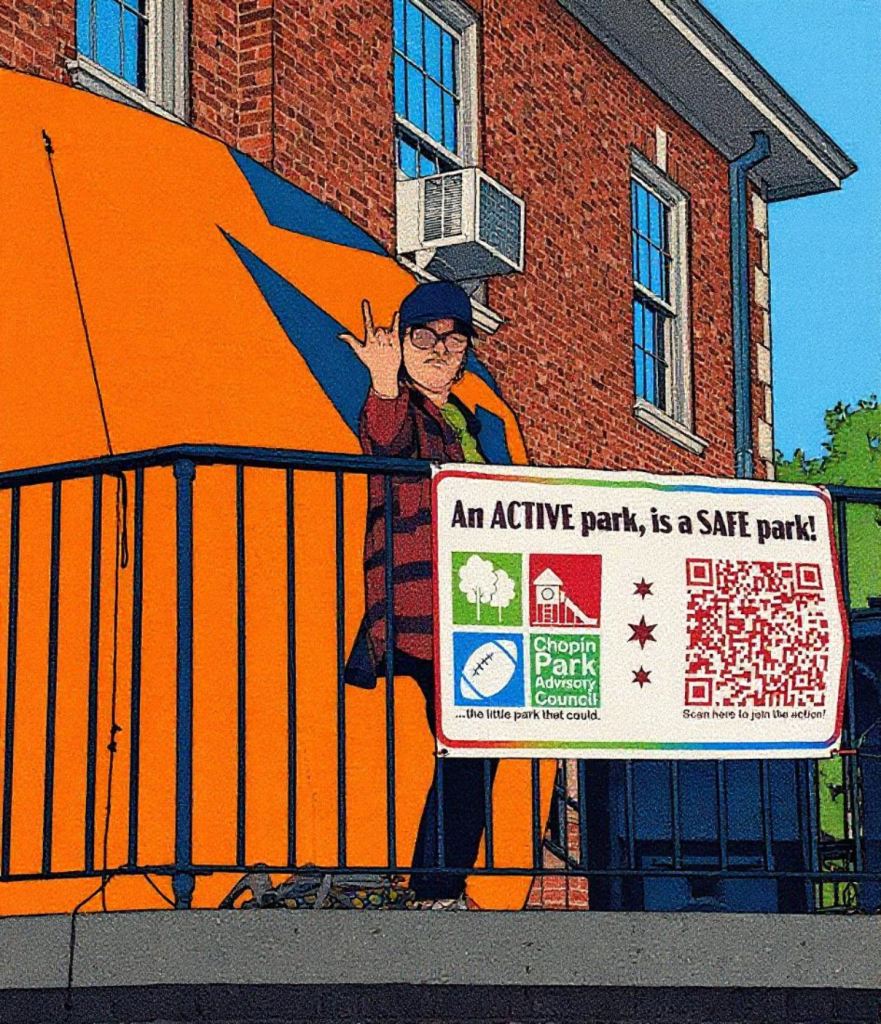
That truth found me at a Harvest Fest in one of our neighborhood parks last weekend. I volunteered to DJ, and my partner hauled speakers and cables, helping me set up atop the steps of the field house that overlooked a lawn framed by trees with golden leaves. Vendors sold popcorn, hand-knit stuffed animals, and soaps that smelled like spices and honey. Food trucks lined the path. A petting zoo and a bounce house kept the kids laughing.
I spent several days building a five-hour playlist: Halloween-themed, clean, and full of pulse. As the late morning became midday, people began to dance. Parents with children. Couples swaying. An older man lifted his grandson and turned in a slow circle, singing along. People waved to me from the path, offered thumbs-up, and moved their shoulders as they talked. Laughter rippled outward until the whole park seemed to move as one. My body hummed with charge, familiar yet changed. The energy didn’t crash when a song ended; it expanded each time someone smiled or joined the rhythm.
It took some reflection post-fest to understand what shifted. The seeking system in my brain found resolution. All that anticipation, including the planning, the setup, and the waiting, was unfolding into connection. Dopamine met oxytocin. Expectation met mutual benefit. For once, the circuit closed.
That was the difference between craving and communion. Craving keeps moving without landing; communion moves and then lands back home in the self. For years, I had treated the high as a problem to solve, a form of excess to discipline. I neglected to understand that it was energy asking for meaning. The Harvest Fest didn’t hand me that meaning, it let me enter it. The music became a current moving through me and I felt myself open in its flow, part of something larger.
From a feminist lens, the moment carried another truth. Women are trained to contain their seeking and convert longing into grace. We learn to manage our appetites rather than trust them. Desire becomes something to restrain, not to understand. Yet the feminine body is built for rhythm, release, and circulation rather than control. Playing music for the community felt like reclamation: desire as participation, not performance. Belonging steadied me more than restraint ever could.
There’s a reason communal joy feels medicinal. The nervous system is a social instrument. Shared rhythm, laughter, and movement flood the body with endorphins and serotonin, the chemicals that isolation tries to counterfeit through intoxication. In the park, those sensations rose naturally, collectively.
The neurochemical engine of anticipation runs on dopamine, endorphins, and adrenaline molecules that combust when we seek pleasure or relief. Chemistry is self-contained and fleeting. The dopamine system fires in isolation: I want, get, and crash. The cycle depends on novelty and repetition because the energy has nowhere to go: it never completes the circuit.
But the Harvest Fest had dopamine’s spark, serotonin’s calm, and oxytocin’s warmth, all fully running the engine. This time the fuel was generated by the community.
I wasn’t chasing; I was circulating. My body still produced excitement and reward signals, but this time they were sustained through social synchrony: rhythm, eye contact, laughter, and movement. The “high” endured because my system was co-regulated, each nervous system feeding stability and pleasure back into the others.
In biological terms, that’s the difference between stimulation and regulation: stimulation peaks and crashes, while regulation flows. Shared joy creates a feedback loop the body can maintain because it’s built on connection rather than depletion.
In emotional terms, it means pleasure no longer depends on control or escape. Energy no longer ends with me; it expands through me. The chemistry that once fueled the solitary chase now has a communal outlet, allowing the feeling of aliveness to sustain instead of collapse.
The high lasted because it belonged to more than one person. I mean this literally and symbolically. Neurobiologically, co-regulation is the collective balancing of nervous systems through shared experience and connection to others. Spiritually, the shared biological event of co-regulation reframes joy as something we hold in common. The body no longer hoards pleasure; it participates in it. Joy is communal rather than private.
I’m trying to say that the cure for craving is not abstinence but belonging.
Sharing this past Saturday with my community made me think about how to rewire my brain. The seeking system was never designed for solitary reward. Its true purpose is relational. Dopamine was never meant to keep us consuming; it was meant to keep us connecting with one another. Capitalism privatized our impulse to connect, so our loneliness collapsed connection into consumption. But we can heal our incessant cravings through collective community participation.
When I returned home, the pulse remained. It wasn’t the sharp spike of accomplishment but a steady hum that settled beneath my skin. I realized it was the same current I’d chased through work, love, and the need to achieve. The craving is never for the object. It is always for the exchange, the living reciprocity that tells the body it belongs.
When craving is understood, it turns directional. It shows where energy wants to travel. This is not a defect to fix but a signal from the body asking the brain to translate. When the message is ignored, the body loops through familiar motions: drink, click, purchase, repeat. When the message reaches us, the same current guides its way home to connection. Healing begins when anticipation finds a place to land. Recovery is not the death of desire. It breathes life back into it.
That afternoon in the park, I felt my circuitry settle into coherence. The wanting didn’t fade; it deepened. The music ended, the sun set, but the pulse remained.
Addiction is the loop of renewed anticipation, the body chasing the feeling of arrival that never stays. The work is to let that motion find a place to land, to aim it toward what can hold it. When the reach becomes shared, the high endures. The circuit completes.
Discover more from Mocktail Hour with Amy Abeln
Subscribe to get the latest posts sent to your email.
